

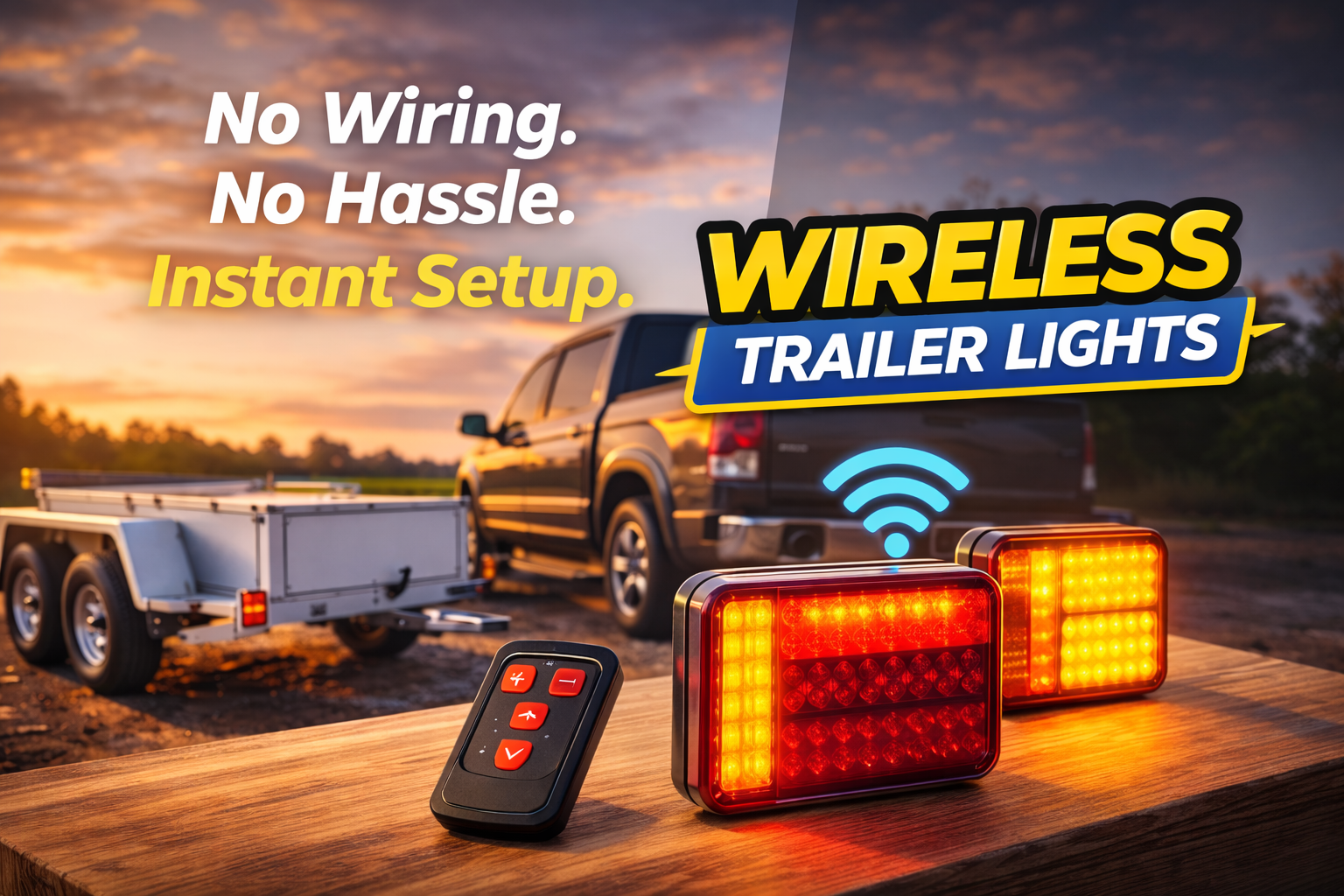
Wireless trailer lights are rapidly reshaping the towing accessory market—especially for fleet buyers and OEM procurement managers. But here’s the reality: there’s no reliable, public data or defined spec standard for this product class. Executives and category managers want actionable, testable claims and legal confidence—not generic guides. This post fills those data gaps so your team can evaluate, commercialize, and properly spec out wireless trailer lighting systems.
Key Takeaways
- There is no public, category-level market data for wireless trailer lights; all available numbers use broader proxies, leaving a validation gap for serious buyers.
- Fleet and category managers must demand transparent, testable technical specs and DOT/SAE compliance documentation from suppliers before commercial rollout.
- Hands-on testing protocols, true TCO models, and SKU-level price/spec comparison tables are critical—publish them early to dominate this underserved space.
- Market snapshot and why this product category matters
- The data gap — what the research DID and DID NOT find (and why that matters)
- Product taxonomy and buyer-facing product types to cover
- Minimum publishable technical spec template (what buyers expect)
- Supplier / SKU intelligence — what we must collect to fill the gap
- User pain points & failure modes we must validate (research plan)
- Pricing, lifecycle cost & TCO framework to publish
- Regulatory & compliance checklist (what must be verified before sale)
- Lab & field test plan we must publish (replicable protocols)
- Content gaps competitors miss — high-value content to create
- Editorial instructions — tone, data transparency, and sourcing
- Recommended CTAs and asset deliverables for commercial buyers
- Quick production checklist for the writer (deliverables)
Market snapshot and why this product category matters
The broader lighting and trailer-wiring markets are significant commercial drivers. But there’s a critical gap—wireless trailer lights lack an identifiable market data footprint. This leaves fleet procurement and OEM managers with no real baseline for volumes, adoption, or competitive share.
Instead, you’ll find that the global wireless lighting market was valued at USD 146.2 billion in 2025 and is projected to reach USD 205.8 billion by 2035 at a 3.5% CAGR. North America accounts for 25%—driven by smart lighting demand. By comparison, trailer wiring harness kits reached USD 729.82 million in 2024 and could reach USD 1,112.87 million by 2032 at 5.8% CAGR. Yet none of this is granular enough for actual procurement, pricing, or category leadership decisions on wireless trailer lights or LED trailer light kit sales.
The data gap — what the research DID and DID NOT find (and why that matters)
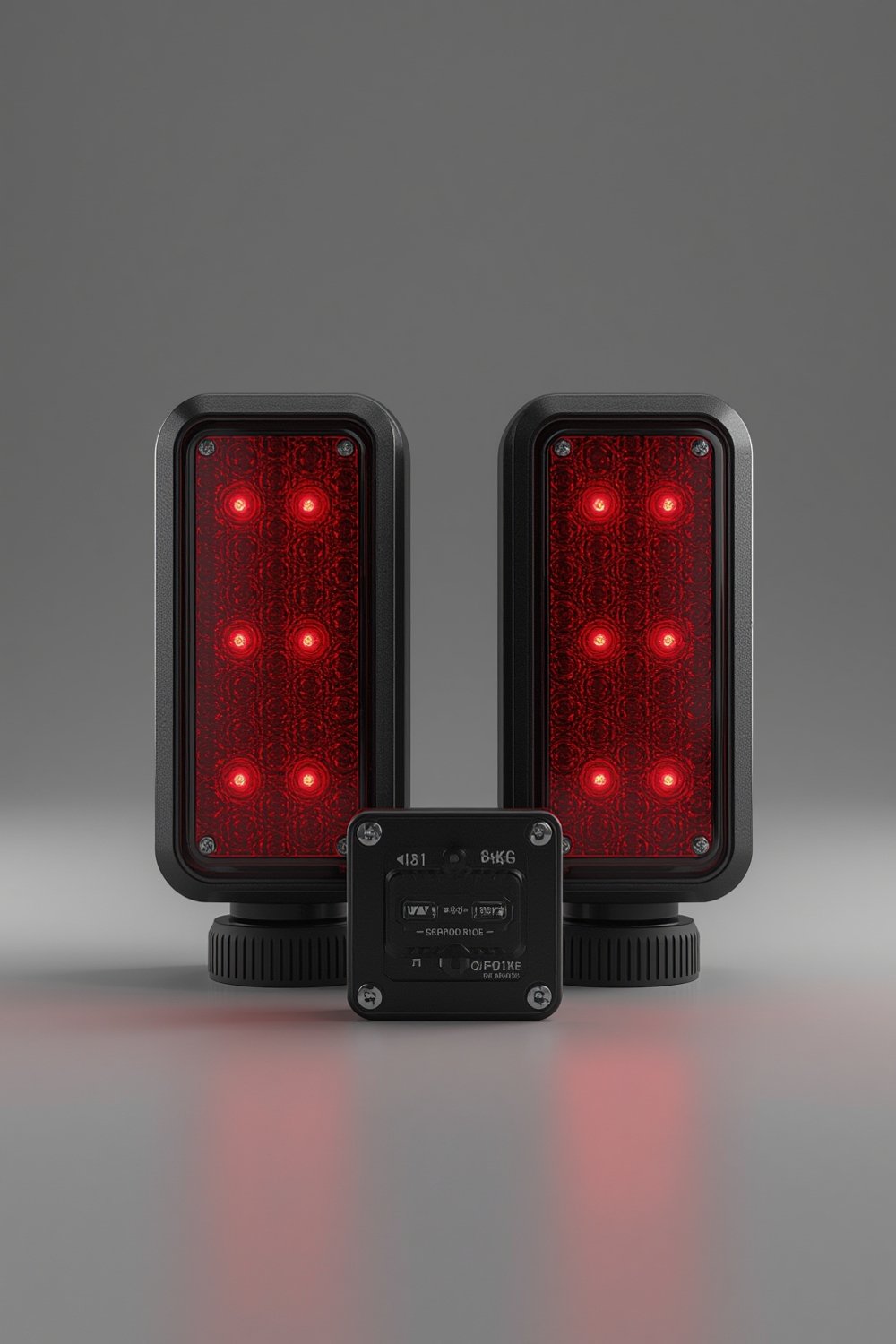
There’s a total absence of public, product-specific data for wireless trailer lights and magnetic wireless trailer lights. Here’s the gap list:
- No specific market data or unit sales by channel, SKU ranks, or subcategory share
- No technical specifications, benchmarks, or even spec templates available
- No user reviews, complaints, pain point summaries, or failure modes documented anywhere public
- No pricing, MSRP, or wholesale/retail tiers for any class
- No DOT/SAE specs or state-by-state requirements mapped to product types
- No lab or field test protocols, methodologies, or reproducible test results
If you’re a category manager or product owner, this is double-edged: it creates both risk (for sourcing, compliance, TCO), and a clear opportunity to win by being the first to publish authoritative content and test-resulted specs for wireless trailer lights. This is true for technical product categories in every emerging B2B vertical.
Product taxonomy and buyer-facing product types to cover
The market lacks well-defined commercial classes. Here’s the taxonomy you need to publish for purchasing clarity and search dominance:
- Temporary trailer lighting (magnetic, quick-mount wireless): Designed for rentals, fast attach/removal, emergency, or short-term tows
- Rechargeable LED trailer light kits: Focused on battery duration, easy recharge, mid-term use
- Bluetooth trailer lights and connectivity systems: For fleet digital asset tracking, live diagnostics, enhanced integration
- Tow truck / professional wireless light kits: Rugged build, typically targeting commercial insurance/compliance needs
- RV wireless light systems: Integrated solutions targeting large trailers, RVs, and campers, often with waterproofing and extended-range needs
- Full LED trailer light kits (wireless): Replacement kits, scaling from light car trailers to ag/construction rigs
Without this taxonomy, buyers are forced to make apples-to-oranges comparisons. For context, “No specific market data exists for wireless trailer lights as a distinct category in 2022–2025.” Use this gap as a competitive edge—create, define, and publish your own subcategory tree for search and sales clarity.
Minimum publishable technical spec template (what buyers expect)
Serious buyers of rechargeable trailer lights and magnetic wireless trailer lights expect every SKU or product page to display these fields:
| Wireless Range | (feet/meters, under-load and open-field) |
| Protocol/Frequency | (RF, BLE, WiFi—exact MHz/GHz, channel/frequency hopping support) |
| Operating Voltage | (e.g., 12v, 24v, multi-voltage support) |
| Current Draw | (amps @ typical use, plus max peak) |
| Lumens per lamp | (actual tested output) |
| LED Chip Type | (e.g., SMD 2835, SMD 5050—vendor/model) |
| Battery Capacity | (mAh, cell type, cycle life in charge cycles, recharge time) |
| Magnet Holding Force | (lbs/kg, surface conditions, backing material) |
| Ingress Protection Rating | (IP65, IP67, IP68, tested not just claimed) |
Research shows: “No technical specifications or benchmarks available in search results for any listed product types …” These specs allow for apple-to-apple comparison, legal verification, and actionable claims—justifying higher price points for B2B or fleet sales. See how this strategy aligns with technical products like oled monitors and ANC sleep earbuds, where detailed specs build category leadership and conversion.
Supplier / SKU intelligence — what we must collect to fill the gap
To build a market map and pricing baseline for any LED trailer light kit or Bluetooth trailer lights, collect at the SKU level:
- Unit volume by channel (retail, Amazon, OEM/reseller)
- MSRP, actual street price, and wholesale tier pricing for each product class
- Top-selling SKUs, brands, and model breakdown by subcategory (magnetic, rechargeable, RV)
- Estimated market share of each subcategory (expressed as a % of total channel sales)
You must interrogate suppliers, distributors, and public retailer inventories for this data. Research found: “No data on unit sales by channel (retail/Amazon/OEM), top SKUs, brands, or subcategory shares …” Without these, procurement cannot validate or justify pricing for stock or resale programs.
User pain points & failure modes we must validate (research plan)
There’s zero public synthesis of user complaints for magnetic wireless trailer lights or tow truck wireless lights. Build a research plan around these critical failure points:
- Wireless connection dropout and interference (especially in urban, metal-dense environments)
- Battery failure (short runtime, failure to charge, weak cycle life)
- Magnet detachment or loss (especially in vibration or rain)
- Ingress protection failure (water/dust—IP claims not matching reality)
- Inadequate brightness (lumens under-delivering, especially during daylight)
- Mounting integrity or excessive vibration loosening
- Electrical issues and compatibility faults (braking, turn signal timing/recognition)
- Quick runtime depletion (especially under extreme cold/heat)
- Recharge/connector failures (mechanical or charge controller issues)
- Confusion about legal/compliance status for temporary or magnetic units
Mining Amazon, eBay, Reddit, and YouTube is critical for these insights. Yet research found: “No user reviews, pain points, complaints, or frequency data available from Amazon, eBay, HomeTow, Reddit, towing forums, or YouTube for wireless trailer lights.” Consider how this approach is used in product categories like retro handheld game consoles to uncover real-world issues before commercial launch.
Pricing, lifecycle cost & TCO framework to publish
To drive commercial buyer decisions for rechargeable trailer lights and temporary trailer lighting, define transparent price bands and TCO model fields at launch for each product class:
- MSRP and street price ranges—temporary magnetic lights, rechargeable LED kits, Bluetooth/connected systems, commercial tow truck kits, RV light systems
- Wholesale pricing tiers—define breakpoints by order volume
- Replacement component costs—batteries, magnets, lenses, mounting hardware
- Installation/setup labor—DIY (user hours) vs. pro install (shop rates)
- Expected warranty claim rates—battery, electronics, ingress protection
- 2–5 year TCO scenarios—price, maintenance, expected replacement, and downtime cost modeling
Always label data as “verified by supplier quote” or “unknown—pending direct inquiry.” Research confirms: “No pricing, MSRP, wholesale tiers, replacement costs … or TCO data available for any product class …” See how lifecycle modeling drives confidence for buyers of technical SKUs, echoing best practice in spaces like smart home hubs.

Regulatory & compliance checklist (what must be verified before sale)
Failing to document compliance with DOT/SAE and state-by-state standards is a serious legal risk—especially for commercial buyers of wireless trailer lights and waterproof trailer lights. Publish:
- A matrix covering tail, brake, turn, and side marker requirements for each US state
- Whether magnetic and temporary wireless lights meet short-term and emergency towing legality in every major state
- All recognized connector types each product supports—with photos/documentation on every SKU page
- Citations for every regulatory or standards claim and effective compliance dates
Research found: “No DOT/SAE requirements, state-by-state standards … compliance for magnetic/temporary wireless lights … or regulatory changes/effective dates available in search results.” Without this matrix, buyer confusion and rejected installations will spike. Mirror this approach from industries like gaming CPU compatibility documentation—the more explicit, the safer and more credible your product line.
Lab & field test plan we must publish (replicable protocols)
Every commercial buyer demands evidence, not just claims. Your listings for Bluetooth trailer lights and magnetic wireless trailer lights must include:
- Magnetic hold force testing—multiple surfaces and speeds
- Waterproof/IP and salt-spray exposures—test beyond just a garden hose
- Vibration and drop tests—documented equipment, force levels, pass/fail criteria
- Wireless range and reliability (dBm/packet loss)—real trailer loaded/Yard/urban test protocols
- Lumens/beam pattern measurements—certified gear, in-field photos
- Battery cycle/degradation tracking—runtime under real operating modes
- Photography/video documentation—every major test must have clear evidence for listings and downloadable whitepaper use
Publish all raw data, formats, and methods. Research states: “No lab/field test protocols, data, methodologies … available.” This is a critical trust-building asset—and a SERP differentiator for your wireless trailer lights, similar to teardown/test guides seen with hidden cameras and other technical SKUs.
Content gaps competitors miss — high-value content to create
Analysis shows not a single high-ranking article or category page delivers what commercial buyers need for RV wireless light system or Bluetooth trailer lights. To fill this gap, immediately prioritize:
- Lab-grade durability and field test reports—raw data plus teardown photos
- Legal compliance matrix/state-by-state map—downloadable as PDF
- SKU/spec downloadable comparison table—every subcategory, at least 10 fields
Formats that reliably drive authority and conversion include: video teardowns, downloadable spec comparison PDFs, and interactive product selectors. Research shows: “No SERP analysis, competing article gaps, or underserved subtopics … identified.” Move fast—early asset production is key to winning this search and procurement space.
Editorial instructions — tone, data transparency, and sourcing
This category is high-risk for unsourced claims. Require:
- Every numeric/statistical claim must be attributed (supplier invoice, lab report, regulatory doc) or labeled “no data available” if unsourced
- Use conservative, direct language—no hype, avoid “market leader” or “top rated” without proof
- Attach PDF appendices and supplier docs to each downloadable asset mentioned
- Build a reproducible research appendix per post, identifying all sourcing gaps
This ensures legal defensibility and trust, matching what research confirms: “No specific market data exists for wireless trailer lights as a distinct category … No technical specifications or benchmarks available …” This approach works across industries—see how DJ controllers and technical gear content uses citations and invoices for every table or chart.
Recommended CTAs and asset deliverables for commercial buyers
Commercial buyers of tow truck wireless lights and temporary trailer lighting require:
- Downloadable spec and SKU-by-SKU comparison, with supplier sourcing on each line
- Request-a-quote (RAQ) pathway—SKU or volume-based form capture for enterprise/fleet buyers
- Lab-test protocol PDF—detailing full methods and test results
- Compliance checklist PDF and interactive calculator
- Demo/trial kit outreach—scheduler or inquiry for hands-on product review/test
Research shows: “No SKU/price/test data published …” Gating (requiring email or inquiry to unlock) these deliverables drastically improves lead quality and completion for new wireless trailer lights offerings—mirroring B2B playbooks in emerging e-commerce verticals.
Quick production checklist for the writer (deliverables)
To fill the key content and data gaps for magnetic wireless trailer lights and rechargeable trailer lights, every post must include:
- 1-paragraph hero summary
- 10 core H2 sections with 300–600 words each (all above topics)
- 1-page compliance matrix PDF
- 2-page lab-test protocol appendix (method, evidence, raw data snaps)
- 1 downloadable SKU/spec CSV (min: model/wireless range/protocol/battery/price/TCO)
- 3 comparison tables by type, compliance, price/spec
- 2 short demo videos (wireless range test + magnet test)
- Sourcing appendix with complete supplier contact/invoice/quote trail
This directly addresses the gap: “No lab/field test protocols, data, methodologies, results … No pricing, MSRP, wholesale tiers …” Results: content credibility, buyer trust, and clear market differentiation for your wireless trailer light SKUs and B2B division.

Conclusion
The facts speak for themselves: the business case for advanced wireless trailer lights is clear, but the public data and spec landscape is an open field. Serious commercial buyers and category leaders should focus on highly transparent, evidence-driven content—detailed specs, test results, and legal matrices—to seize this under-served product space. Ready to build trust and outpace slow-moving competitors? Download our SKU/spec templates or request a full compliance report now.
FAQ: Wireless Trailer Lights — Commercial Buyers Edition
Do wireless trailer lights meet DOT/SAE standards?
There is currently no public, category-specific evidence that wireless trailer lights meet all DOT/SAE or state-by-state requirements for all trailer types. Always request compliance certifications and review our downloadable compliance matrix for each SKU.
What key specs should every wireless trailer light product page publish?
Every listing should show wireless range, frequency/protocol, voltage/current, lumens, LED chip type, battery capacity and cycle life, magnet holding strength, and IP rating—plus source invoices or test results for each.
Which product types exist in the wireless trailer lights market?
Expect six classes: temporary/magnetic sets, rechargeable LED kits, Bluetooth-integrated systems, professional tow-truck kits, RV wireless systems, and full wireless LED trailer light kits.
How do I estimate lifecycle costs compared to wired systems?
Cost models should include MSRP/wholesale, replacement part prices, install labor, battery replacement cycles, and 2–5 year TCO projections. If suppliers do not provide, require detailed BOM and warranty terms before bulk buy decisions.
What unique research or content does this post provide vs competitors?
This guide exposes all missing data for commercial buyers, outlines exactly what actionable specs, compliance docs, and test protocols to demand, and offers a step-by-step framework for dominating this product category with evidence-based assets.
—